


Elevated Dog Feeder Dish Stand, 15 Inches Tall, 1-Place, Walnut
Elevated Dog Feeder Dish Stand, 15 Inches Tall, 1-Place, Walnut
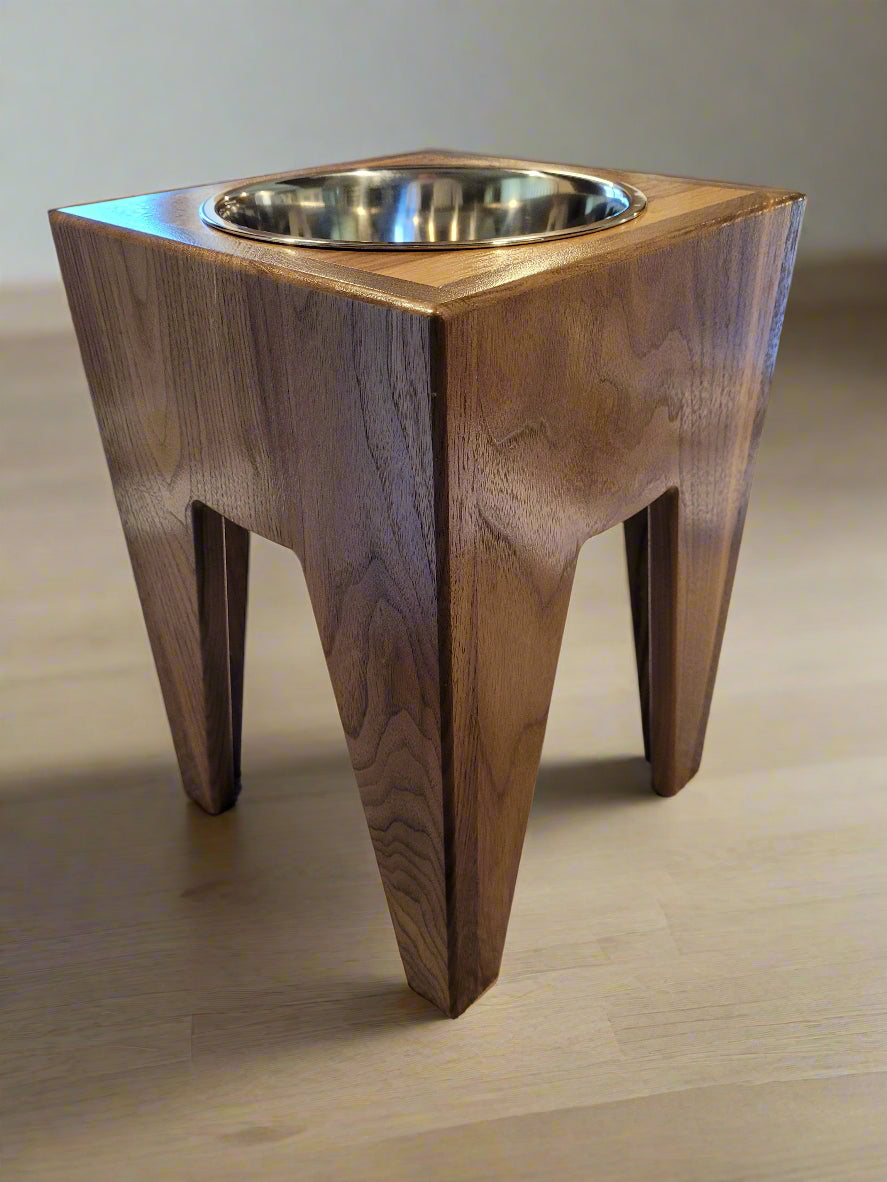
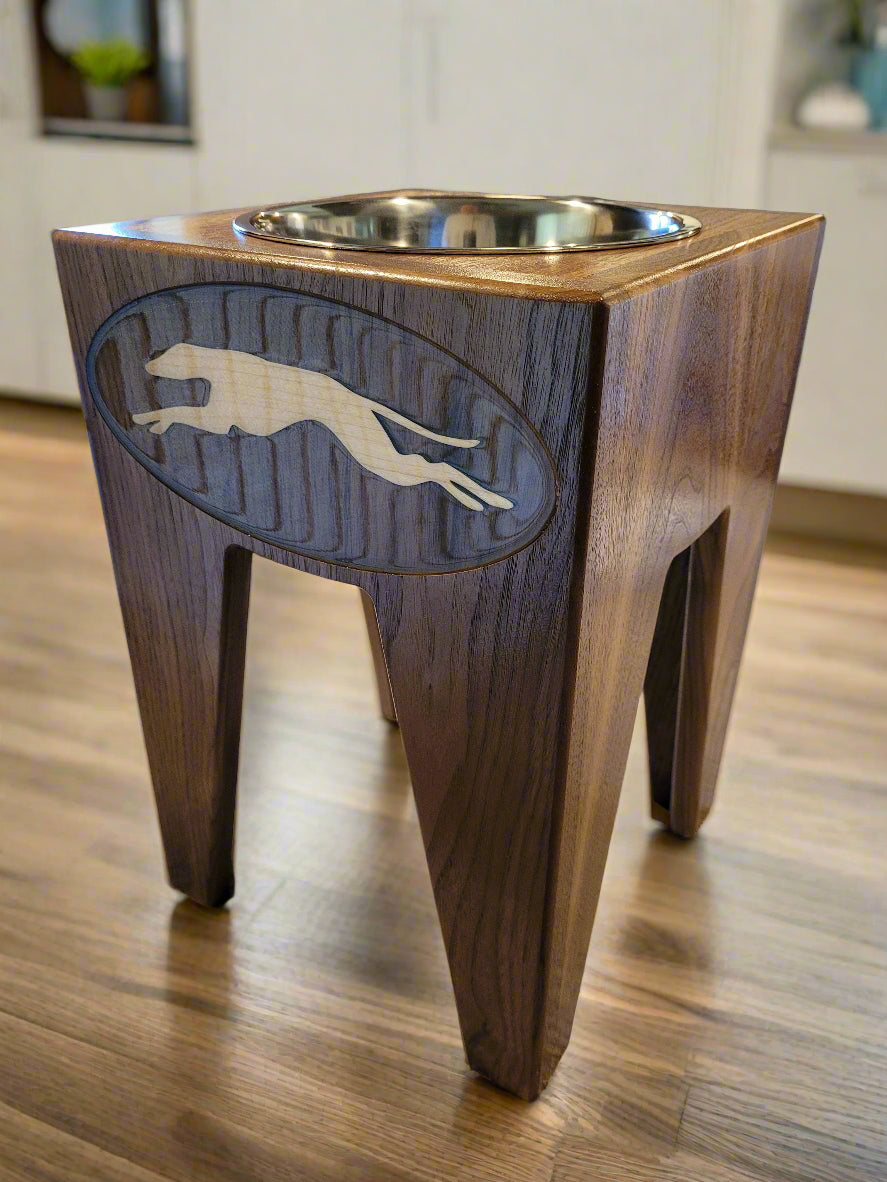
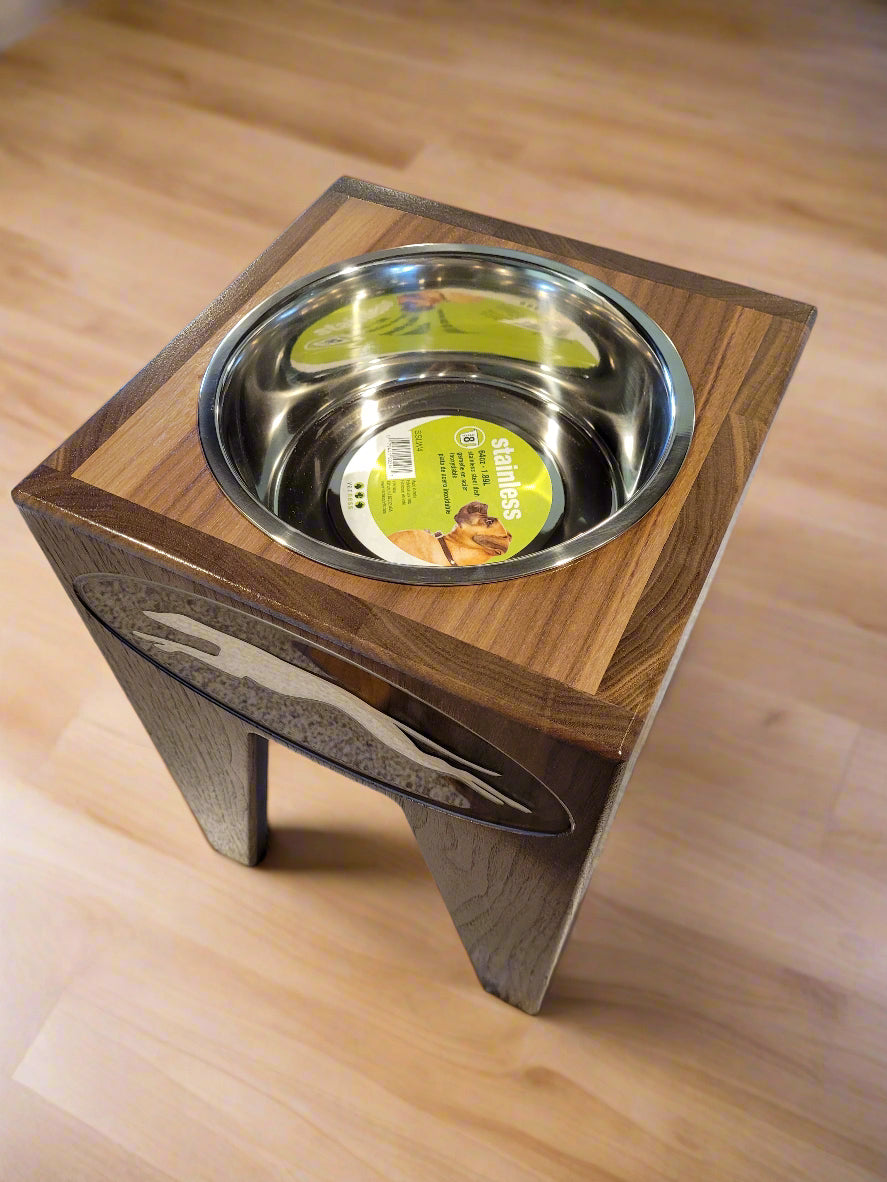
This elegant handmade dog dish stand is crafted from solid walnut with a beautiful maple inlay, bathed in clear resin for a unique, glossy look. Standing 15 inches tall and finished with a durable, serviceable clear shellac, it offers lasting protection while enhancing your décor. Complete with a stainless steel bowl, it combines style and practicality to make your pet’s feeding time both comfortable and refined.
Dimensions - height=15 in., length=10 in., width=10 in., dish hole=7.5 in. dia.
*Handmade wood products offer unique benefits, including exceptional craftsmanship and quality, as each piece is meticulously created by skilled artisans with decades of experience, resulting in superior durability and finish. These items are one-of-a-kind due to natural wood grain variations and hand-finishing, and customization is often possible, making each piece personal and meaningful.*
Couldn't load pickup availability
Out of stock
View full details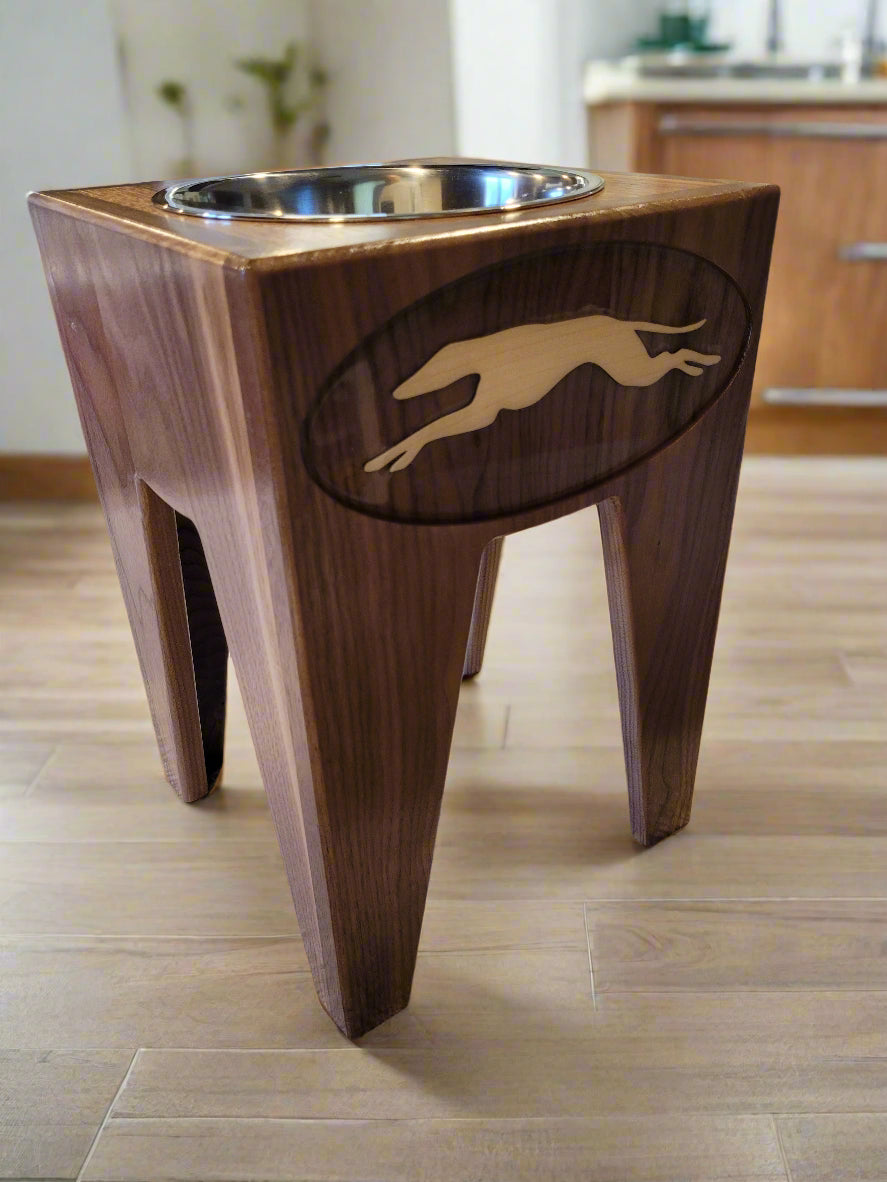

Details
Benefits, Sizing, and More
Benefits of Elevated Dog Bowl Stands
There are several functional and aesthetic reasons why a person might choose an elevated dog bowl stand, ranging from orthopedic support for the dog to keeping the owner's kitchen cleaner.
Primary Reasons for Purchase
• Joint & Posture Support: This is the most common reason. Raised bowls significantly reduce the distance a dog must stoop to eat. This relieves strain on the neck, hips, and shoulders, which is helpful for:
○ Senior dogs suffering from arthritis or stiffness.
○ Large or giant breeds (like Great Danes or Mastiffs) that have a long way to bend.
○ Dogs with physical disabilities (e.g., three-legged dogs) or those recovering from surgery who need help maintaining balance.
• Digestive Aid (Medical Needs):
○ Megaesophagus: This is a condition where the esophagus cannot effectively push food into the stomach. Elevating the bowl allows gravity to do the work, preventing regurgitation.
○ Swallowing Issues: Some dogs swallow more easily when their head is elevated above their stomach level.
○ Note: Historically, people bought these to prevent bloat (Gastric Dilatation-Volvulus). However, current veterinary studies are mixed, with some suggesting raised feeders may actually increase bloat risk in certain large breeds. Owners often buy them for this reason based on older advice, but it is a debated topic.
• Cleanliness & Hygiene:
○ Cleaner Floors: Elevated stands often have a lip or surface that catches splashing water and dropped kibble, preventing it from ending up on the floor.
○ Less Bowl Movement: A heavy stand prevents "aggressive eaters" from sliding their bowl across the kitchen floor while eating.
○ Sanitation: Raising the bowl helps keep floor dust, hair, and bugs out of the food and water.
• Owner Convenience:
Easier Refilling: Owners with back pain or mobility issues often prefer these stands because they do not have to bend down as far to pick up and refill the bowls.
Sizing a Dog Dish Stand
Here is the standard method for finding the correct height for an elevated feeder. The goal is for your dog to eat without stooping their neck down or reaching their head up.
How to Measure Your Dog
1. Get them standing: Have your dog stand on a flat surface with all four paws squarely on the floor. (It helps to have a treat handy to keep them still!)
2. Find the "Withers": Locate the top of your dog's shoulders. This is the bony ridge between the shoulder blades at the base of the neck.
3. Measure: Use a tape measure to get the distance from the floor to the withers.
4. Calculate the Bowl Height:
○ For Large/Giant Dogs: Subtract approximately 6 inches from the shoulder height.
○ For Medium Dogs: Subtract approximately 4 inches.
○ For Small Dogs: Subtract approximately 2 inches.
The Visual Rule of Thumb: When the dog is standing in front of the feeder, the rim of the bowl should be level with the lower part of the dog's chest (where the front legs meet the body). The dog should be able to eat with their neck in a neutral position, looking slightly downward.
General Height Reference Chart
If you can't measure your dog right now (for example, if you are buying a gift), these are the industry averages:
Dog Size, Dog Height (at shoulder), and Ideal Stand Height
Small (Beagle, Cocker Spaniel), Height at Shoulder 10"–14", Stand Height 4"–6"
Medium (Border Collie, Boxer), Height at Shoulder 15"–20", Stand Height 7"–11"
Large (Labrador, Golden Retriever), Height at Shoulder 21"–27". Stand Height 11"–15"
Giant (Great Dane, Mastiff), Height at Shoulder 28" plus, Stand Height 18"–24"
Introducing Your Stand to Your Dog
Here are a few tricks to make sure your dog loves their new dining table right away.
How to Introduce the New Stand
1. The "Same Spot" Rule:
Place the new stand in the exact same location where their old bowls used to be. Dogs are creatures of habit, and moving their "dining room" and changing the furniture at the same time can be confusing.
2. The "Scary Noise" Check:
Before you put food in, tap the metal bowl against the stand. Does it clang loudly?
○ Why it matters: If your dog takes a bite and the bowl rattles or bangs, it might startle them.
○ The Fix: If the stand didn't come with rubber bumpers, wrap a couple of thick rubber bands around the rim of the stainless steel bowl. This creates a DIY silencer and keeps the bowl snug.
3. The Treat Lure (The "Jackpot"):
Don't just fill it with kibble and walk away.
○ Put a few high-value treats (like cheese, chicken, or peanut butter) in the bowl while you are standing there.
○ Let them eat the treats. This creates an immediate positive association: Tall Thing = Delicious Snacks.
4. The First Meal:
For the first real meal, mix something extra tasty into their food. If they are hesitant to approach the "looming" tower, the smell of the high-value topper will usually overcome their suspicion.
Troubleshooting & FAQ's
1. My dog seems hesitant to use the new stand. What should I do?
It is perfectly normal for some dogs to be "bowl shy" when their environment changes.
• The Scent Trick: Rub a little bit of their favorite high-value treat (like peanut butter or a bit of cheese) on the edge of the new stainless steel bowls.
• Slow Transition: Place the stand in the exact same spot as their old bowls. For the first few meals, you can even place their old bowl inside the new stand hole if it fits, until they get used to the new height.
• Check the Floor: Ensure the stand is level. If your floor is uneven, the stand might "wobble" slightly, which can spook a nervous dog.
2. How do I maintain the "Slobber-Proof" finish?
Care Instructions for Stands Featuring a Waterborne Finish
Our waterborne topcoats are industrial-grade, but wood is a natural material.
• Daily: Quickly wipe away standing water.
• Monthly: Check the areas around the bowl cutouts. If you notice a buildup of dried food or mineral deposits from hard water, clean it with a 50/50 mix of water and white vinegar to restore the satin sheen.
• Avoid: Never use furniture polish (like Pledge) or oil-based cleaners, as these can interfere with the waterborne seal and may not be food-safe for your pup.
Care Instructions for Stands Finished with Shellac
Shellac is a natural finish prized for its depth and warmth. While beautiful, it is organic and more sensitive than synthetic finishes. Please follow these guidelines to preserve its luster.
Routine Cleaning
• Dusting: Dust frequently with a soft, lint-free microfiber cloth or feather duster.
• Wiping: If necessary, wipe with a slightly damp cloth and dry immediately with a separate soft cloth. Never let water pool on the surface.
• Avoid Chemicals: Do not use all-purpose cleaners, ammonia, or furniture sprays containing silicone.
Protecting the Finish
• No Alcohol: Shellac dissolves in alcohol. Keep perfume, high-proof liquor, and medicine away from the surface. Clean spills immediately.
• No Heat: Heat can cause white rings or soften the finish.
Long-Term Maintenance
• Apply a high-quality furniture paste wax once a year to protect the surface and renew the shine. Avoid over-waxing.
For additional details, please email your questions to support@dadosndovetails.com
3. My dog is an "aggressive eater." Will the stand move?
At 15 inches tall and made of solid pine, our stands have significant "heft." However, if you have very slick tile or hardwood floors:
• Check the Feet: We include non-slip pads on every unit. Ensure they are free of dust or pet hair to maintain their "grip."
• Placement: Placing the back of the stand against a wall can provide extra stability for the most enthusiastic diners.
4. Can I change the bowls later?
Yes! We designed our 15" stands with standard 7.5-inch diameter cutouts.
5. Is 15" still the right height as my dog ages?
Usually, yes! In fact, as dogs develop arthritis or vestibular (balance) issues, the 15" height becomes even more important. However, if your dog develops a condition where they can no longer stand comfortably, contact us—we can discuss custom "shortened" legs to adapt the stand to their changing needs.
Our 2 Year Craftsmanship Warranty
We take immense pride in our work. Dados & Dovetails LLC warrants this stand against defects in materials and craftsmanship for two years from the date of purchase.
• What’s Covered: Structural failure, joint separation, or hardware issues.
• What’s Not Covered: Damage from chewing (we know, they’re rascals!), normal wear and tear, or damage from being submerged in water.
Got questions or want to show off your pup?
Tag us on Instagram @dadosndovetails or email us at Support@dadosndovetails.com.